


HSE (Health, Safety & Environment) managers play a central role in shaping health in the workplace in a sustainable, systematic, and effective way – not just physically, but increasingly mentally as well. Their responsibilities go far beyond organizing individual measures: they coordinate processes, conduct analyses, develop strategies, and create structures that enable long-term healthy work.
When it comes to mental health, they in particular need solid knowledge, legal certainty, accurate analyses, and a good sense for measures that really make an impact.
This article therefore brings together everything HSE managers need to know about mental health in the workplace – presented in a Q&A format.
1. What does mental health have to do with HSE?
Corporate health management must always include mental health. Many of today’s workplace health risks are not (only) physical but psychological in nature. Stress, overload, and mental exhaustion often reflect structural pressures and the growing complexity of the modern work environment.
HSE managers can intervene here: they create conditions that reduce mental strain while helping employees recognize stressful patterns and strengthen their mental resilience. This includes both individual measures, such as resilience training or mindfulness courses, and structural changes in work organization, leadership, and company culture.
The relevance of mental health for companies is only going to increase: a 2025 Gallup study shows that only 33% of employees feel mentally stable and capable of performing at their best. HSE must therefore be more than just organizing health days – it is a central management tool to anchor mental health and performance sustainably within the company.
2. How are mental health and sick leave connected?
Psychological strain has long become a central factor in work-related sick leave. Burnout, depressive symptoms, and anxiety disorders are now among the most common causes of incapacity for work – and the numbers continue to rise.
According to the AOK Absence Report, the number of sick days due to mental health issues has increased by 47% over the past ten years. Particularly striking is the rise in burnout-related absence days, from around 100 to almost 184 days per 100 employees between 2014 and 2024.
The causes are varied: societal developments such as increasing uncertainty and crises, economic pressure, but also personal factors like family burdens or chronic stress. Equally relevant for companies are internal conditions: high workloads, unclear roles, insufficient recovery, and a lack of psychological safety.
This is exactly where HSE can make a difference. Strategically designed corporate health management implements targeted measures to reduce mental strain and related absences, while strengthening mental well-being in everyday work life.
Psychische Belastungen sind längst zu einem zentralen Faktor für krankheitsbedingte Fehlzeiten geworden. Burnout, depressive Symptome und Angststörungen zählen heute zu den häufigsten Ursachen für Arbeitsunfähigkeit – und die Zahlen steigen weiter.
3. What legal requirements exist for HSE managers regarding mental health in the workplace?
Corporate health management (CHM) is not mandatory in Germany, Austria, or Switzerland – unlike occupational safety. And that is precisely where mental health is clearly regulated: in Germany, employers are required to systematically assess and reduce psychological strain at work. A key tool for this is the risk assessment, which must explicitly include psychological factors.
Key legal frameworks:
- § 3 and §4 of the Occupational Safety Act (ArbSchG): Employers must design working conditions so that physical and psychological hazards are avoided as much as possible.
- § 5 ArbSchG: Requires a risk assessment – since 2013, “psychological stress at work” has been explicitly listed as a hazard (§5 para. 3 no. 6).
- EU Framework Directive 89/391/EEC: Requires the assessment of all work-related risks across Europe, including psychosocial risks such as stress, bullying, or emotional strain.
These obligations apply from the very first employee, regardless of industry or company size. Employers must systematically analyze relevant psychological risks (e.g., time pressure, unclear roles, leadership behavior), derive appropriate protective measures, and regularly review their effectiveness. Changes within the company – such as new technologies or restructuring – also require adjustments.
Voluntary corporate health management cannot replace these legal obligations, but it provides the ideal framework to implement psychological risk assessments professionally and link them with additional measures to promote mental health.
4. What responsibility do HSE managers have for employees’ mental health?
HSE managers create the framework to actively promote mental health in the company and ensure that legal requirements are met. The legal responsibility, however, lies with the employer and leadership; HSE is responsible for operational implementation and strategic management.
Key responsibilities at a glance:
- Strategic integration: Incorporate mental health as an objective in the HSE concept (e.g., mission statement, KPIs, priorities).
- Process management: Plan, implement, and evaluate measures for mental health.
- Risk assessment: Organize the psychological risk assessment in collaboration with occupational safety and relevant stakeholders.
- Implementation of measures: Develop and coordinate effective initiatives – from structural adjustments to individual support programs.

5. Where are the boundaries between HSE, HR, occupational safety, and the company medical service regarding mental health?
The boundaries are roughly as follows: occupational safety and the company medical service are responsible for the legally required aspects (risk assessments, occupational medical care), HSE translates these into strategies and measures, and HR integrates them into personnel processes, leadership, and company culture. Mental health in the workplace is therefore a shared responsibility across these functions – with clearly defined roles:
- HSE: Develops the strategic health direction, coordinated mental health programs, manages external partners, and ensures evaluation and reporting.
- Occupational safety: Ensures compliance with legal requirements – especially the psychological risk assessment according to §5 ArbSchG – and defines standards for safety and health.
- Company medical service: Provides medical expertise, advises on health risks, conducts examinations, and supports preventive measures – always strictly in a consultative and confidential role.
- HR: Embeds mental health in personnel processes – e.g., leadership, work design, reintegration management (BEM), development, and culture – and creates the structural conditions for healthy work.
6. How are psychological risk assessment and corporate health management connected?
The psychological risk assessment (GB Psych) is a legally required part of occupational safety – corporate health management (CHM) provides the strategic framework in which the obligation can be meaningfully embedded and further developed.
Both elements work hand in hand: the GB Psych provides concrete data on psychological strains in everyday work, and HSE uses these insights to develop, implement, and evaluate targeted measures over the long term.
In many organizations, HSE managers coordinate the psychological risk assessment – from methodological implementation to strategic implementation.
7. How can HSE managers promote mental health in the workplace?
HSE managers can create structures and offerings on different levels to foster employees’ mental well-being and contribute to a mentally healthy culture.
Promoting mental health at the organizational level
- Systematically address specific work-related stressors, such as time pressure or unclear roles, based on the results of the psychological risk assessment.
- Collaborate with HR and leadership to design working time models, availability rules, and resource planning that reduce overload and allow for recovery.
Promoting mental health at the leadership level
- Organize training, coaching, one-on-one sessions with psychologists, and peer support for managers – both for their own mental health and to support a healthy leadership culture.
- Encourage leaders to openly discuss experiences of stress, helping to destigmatize mental health within their teams.
Promoting mental health at the individual level
- Provide low-threshold support options – e.g., internal contact points, mental health first-aid courses, easy-access digital platforms with support offerings, and one-on-one support.
- Select providers like nilo based on quality criteria – ensuring clinical expertise, data protection, alignment with employee needs, and fit within the overall HSE concept.
- Foster psychological safety together with HR – e.g., through open communication, health days, or internal campaigns.
8. How should HSE managers handle reintegration after a long absence due to a mental health condition?
Returning to work after mental health-related absence is a sensitive process that should be carefully prepared and supported. The goal is to secure long-term work ability – without overloading the employee and with realistic expectations for all parties involved.
The foundation is Corporate Reintegration Management (BEM), which is legally required if an employee has been unable to work for more than six weeks within twelve months. Additionally, a gradual reintegration can take place – the so-called Hamburger Model – in which the scope and type of work are gradually increased.
The reintegration process ideally consists of five phases:
- Kick-off: A written invitation explains the process, names contact persons, and informs the employee about data protection and the voluntary nature of the procedure.
- Initial meeting: In a confidential setting, expectations are clarified, trust is built, and the next steps are discussed.
- Analyze strains and resources: Identify factors that contributed to the overload and determine the structures or resources needed for a successful return.
- Action planning: Develop an individualized reintegration plan – often including reduced working hours, clear task prioritization, and accompanying support measures.
- Evaluation: After a few months, review whether the measures are effective and what can be learned for future prevention.
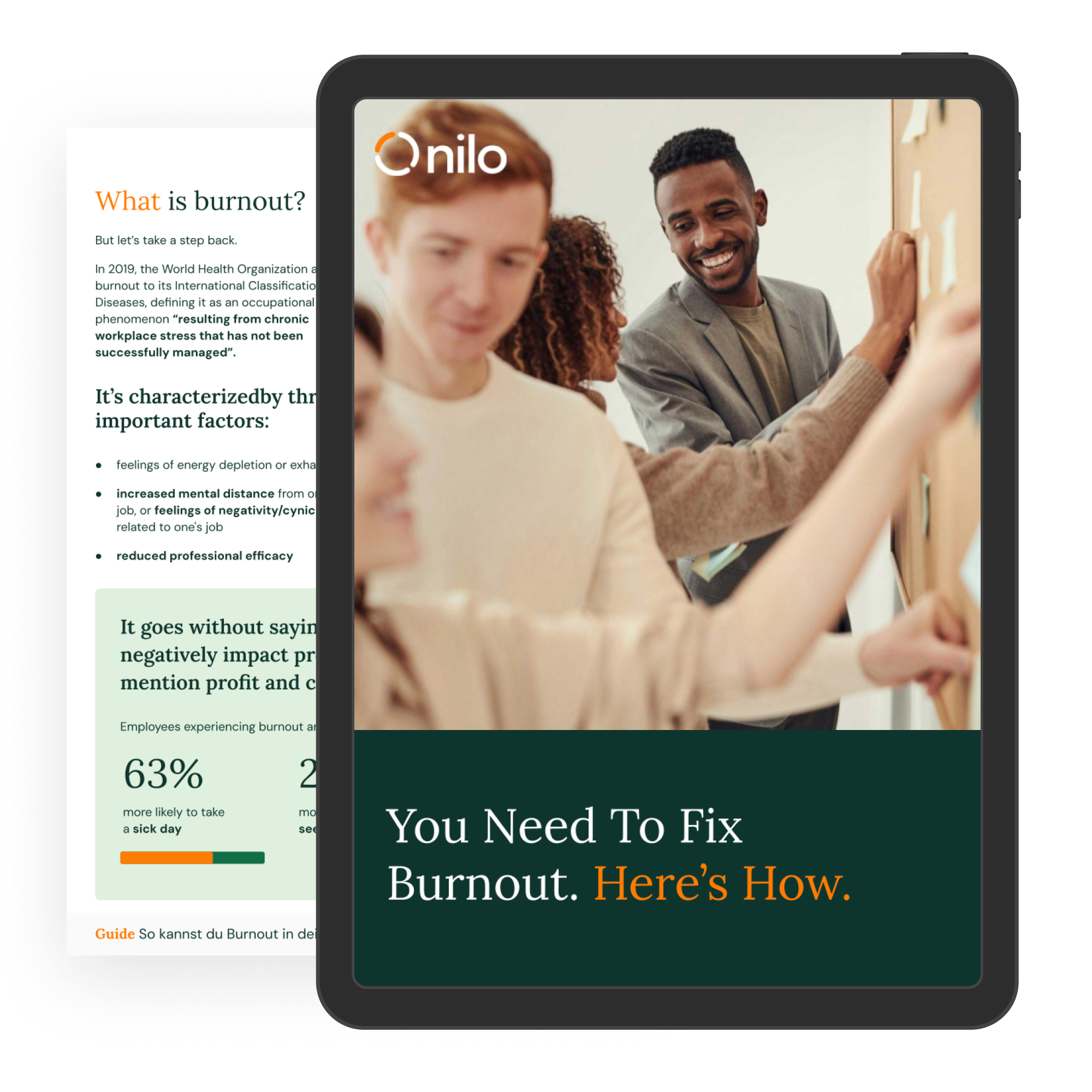
9. How can HSE managers convince leadership to integrate mental health into goals and initiatives?
Mental health is most effectively positioned when it is not seen as a “soft” topic, but as an economic, legal and cultural success factor. The key is to present evidence-based arguments and demonstrate the tangible impact of mental health initiatives.
The following points can help HSE managers make a compelling case to executives, HR, and leadership teams.
Anchor the business case in concrete numbers
- In Germany, sick days due to mental health issues have risen by 47% over the past ten years.
- Presenteeism – reduced productivity despite being at work – is a significant cost factor. The World Health Organization (WHO) estimates the resulting productivity loss at around one trillion USD.
- Mental health benefits can reduce turnover by up to 60%. High turnover, on the other hands, is very costly: replacing a skilled employee can cost 40-200% of their annual salary, depending on the role.
- Investing in employees’ mental health pays off: studies show a fivefold ROI.
Highlight risks and legal obligations
- Psychological strain is part of the legally required risk assessment – a clear occupational safety mandate.
- Neglecting employees’ mental health increases the risk of burnout, reputational damage, and potential company liability.
Show prevention as a success factor
- Mental health support for prevention is one of the most effective ways to avoid burnout and build resilient teams.
- 85% of users of the nilo platform engage with it preventively – with measurable results: 71% of users with high stress levels report improvements.
- Many psychological burdens remain invisible – studies show 8 out of 10 employees do not openly talk about their mental strain. Preventive measures create access before problems escalate.
Demonstrate the impact on company culture and performance
- Mental health initiatives strengthen employer attractiveness and employee retention. Companies with a clear strategy for team mental health have up to 20% more loyal employees.
- Good mental health and strong social connections are key drivers of motivation and performance.
10. How can HSE managers and HR collaborate to support mental health in the workplace?
Mental health is most effectively promoted when HSE managers and HR combine their respective strengths. While HSE provides structure, analysis, and program development, HR brings the levers of leadership, culture, and personnel processes into play. The key is that both areas work strategically together and are closely aligned operationally.
Shared strategy and analysis
- Define joint goals – e.g., reducing mental health-related absenteeism or improving psychological safety – and embed them in both HSE and people strategies.
- Combine data: HSE provides results from psychological risk assessments and health metrics, while HR contributes turnover rates, performance data, and employee feedback.
Develop and communicate measures together
- HSE manages the portfolio of initiatives (training, mental health support programs, digital tools), and HR integrates these initiatives into benefits, leadership programs, and personnel development.
- A joint communication strategy ensures visibility: leadership support in communicating offerings and internal campaigns strengthens a psychologically safe culture.
Clarify responsibilities
- A cross-functional working group including HSE, HR, occupational safety, and, if applicable, the works council helps make jointly supported decisions and improves the success of initiatives.
- Define responsibilities clearly: HSE managers and HR professionals collaborate closely based on shared KPIs and reporting. The roles should be clear: who is involved in design and implementation, and who is responsible for integrating initiatives into the organization? Typically, HSE handles concept and implementation, while HR integrates initiatives into policies, leadership tools, and organizational development – all based on shared KPIs and coordinated reporting.
11. How can HSE managers measure the success of mental health initiatives in the workplace?
Mental health itself is not easily quantified – but the effects of psychological strain and the impact of targeted initiatives certainly can be. For HSE managers, it’s crucial to capture the right indicators, combine them, and track them over time:
- Sick leave: Especially the number and duration of mental health-related absences provide insights into employees’ stress levels.
- Turnover: Frequent resignations or internal transfers can signal overload or dissatisfaction.
- Use of support services: How many employees access sessions with psychologists, EAP programs, or digital offerings – and how does usage change over time?
- Feedback on effectiveness: Subjective assessments, e.g., through user feedback or mini-surveys, help evaluate the quality and usefulness of measures.
- Pulse surveys and employee feedback: Provide insights into psychological safety, perceived workload, leadership behavior, and overall workplace climate.

12. How can HSE managers further their education on mental health in the workplace?
- Mental health is a dynamic field – those who want to work effectively in this area need up-to-date knowledge, legal certainty, and practical methodological skills. There are numerous programs specifically tailored to the role of HSE managers:
- Advanced courses, such as “HSE & Psychological Strain in the Workplace,” provide practical guidance on analyzing mental health risks, planning interventions, and supporting return-to-work processes.
- Specialized seminars on psychological risk assessments give HSE managers legal and methodological confidence in implementation.
- Webinars, professional conferences, and online courses – for example, offered by Haufe Akademie – help keep track of current trends, research findings, and legal changes.
- nilo offers compact learning modules on workplace mental health – covering topics from stress and resilience to communication techniques for handling psychological strain.
- Highly recommended: the mental health first-aid course offered by nilo, which equips leaders and HSE managers to respond sensitively and safely in crisis situations.