


In recent years, many companies have invested in EAPs or mental health benefits. And after a while, the question inevitably arises: Is our utilization rate actually good? HR should be able to answer this question in order to convince management to continue offering the program.
The honest answer: It depends. After all, what constitutes a good utilization rate depends on the goals behind introducing a health benefit, the industry, and the size of the company — and, above all, on whether employees actually perceive the benefit as adding value.
This article explains how to measure employee engagement, what factors influence it, and how HR teams can specifically boost it.

What is a “good” usage rate for mental health solutions?
Why is the utilization rate so important in the first place? It serves as an indicator of the effectiveness of mental health services. Low utilization doesn’t just mean unused budget — and, in effect, higher costs per employee. It also means that employees facing stressful situations — precisely when these services are needed most — are left without support.
It depends on the goal
Before comparing specific figures, companies should ask themselves a fundamental question: What do we hope to achieve with our mental health benefit?
Companies that prioritize prevention aim for consistent, widespread use — that is, they want many employees to regularly use the service as part of their daily routine. The goal here is to achieve high registration and usage rates.
“Effective use depends on the goal”
Companies that primarily aim to offer immediate support often see a different usage pattern: fewer employees use the service, but they do so more intensively and in specific stressful situations. This isn’t necessarily a sign of a poor service, but rather indicates that the service has a different objective. That said, it stands to reason that the impact is greater when as many employees as possible are reached.

When should HR measure usage?
Depending on the phase of implementation, different levels of usage are to be expected — and that’s normal. It makes sense to take a look at the numbers at the following points in time:
- After the launch (first 4–8 weeks): Interest is at its peak during the kick-off phase. This initial check primarily reveals whether the communication efforts have been effective.
- After 3–6 months: The initial curiosity has subsided. It is now becoming clear whether the offering has become part of everyday life. Stagnant or declining usage at this point is a signal to intensify communication efforts or to better integrate the offering into existing processes.
- After 12 months: Only after a year can a reliable assessment of actual usage be made and a meaningful comparison with benchmarks be drawn.
External Benchmarks: What Do Traditional EAP Data Reveal?
To put this into perspective, it is worth taking a look at international benchmarks for traditional Employee Assistance Programs (EAPs):
- According to the UK Employee Assistance Professionals Association (EAPA), the average utilization rate in Europe is approximately 10.4% — with significant variations by industry, ranging from about 4.6% in agriculture to over 11% in service and nonprofit organizations
- According to the Bureau of Labor Statistics, 61% of workers in the U.S. have access to EAPs — but the actual utilization rate is much lower, averaging between 4.5% and 7%.
“Benchmarks are only comparable to a limited extent”
Important note: These figures refer to traditional EAP programs, which are often designed as telephone hotlines or basic counseling services. Digital platforms for mental health in the workplace that offer easy access, digital content, and 1:1 psychological sessions generally achieve significantly higher results.
nilo Benchmarks: Size and Industry Matter
For a modern platform like nilo, the figures are significantly higher on average. Internal data from nilo’s own customer platform makes one thing particularly clear: company size has a significant impact on usage. Larger companies typically have a lower usage rate.

There is a significant difference between industries with predominantly white-collar workforces (e.g., marketing or finance) and those with a high proportion of blue-collar workers (e.g., industrial and manufacturing).
The reasons are structural in nature: Employees in production or logistics roles simply have less flexibility and fewer opportunities to use digital tools in their day-to-day work — a quick session between two meetings is not an option for them. In addition, white-collar employees who work at a computer all day are naturally more digitally savvy and have a lower threshold for trying out new tools.
Usage rate by company size:
| Company size | Usage rate (12 months) |
|---|---|
| Below 200 | 24,3 % |
| 501–1.000 Employees | 15,3 % |
| More than 1.001 Employees | 7,2 % |
Source: nilo internal Benchmarks 2026 (anonymized)
Usage rate by industry (selection):
| Industry | Usage rate (12 months) |
|---|---|
| Transportation & Logistics | 26,1 % |
| Finance & Insurance | 22,0 % |
| Technology & Software | 17,4 % |
| Consumer Goods & Retail | 15,0 % |
| Industrial & Manufacturing | 5,0 % |
Source: nilo internal Benchmarks 2026 (anonymized)
It’s not just about the numbers: What really makes usage “good”?
Usage rates are an important indicator — but ultimately just a means to an end. The real goal is impact: Are employees doing better? Do they feel supported? Are they better able to cope with stress?
A high usage rate that isn’t backed by any perceived improvement isn’t a success. Conversely, a low usage rate accompanied by very positive feedback indicates that the offering is good — but isn’t reaching the right people yet.
What matters most, therefore, is whether employees find the program helpful, whether they feel their needs are being met, and whether they would use it again. Qualitative feedback and a measurable impact on employee well-being are therefore at least as important an indicator as quantitative usage rates.
“Usage without perceived value is worthless”
What factors influence the utilization rate?
Whether employees take advantage of mental health services depends on many different factors. The quality of the services is a key factor, but HR teams and managers can influence many other aspects. One factor that is often underestimated is the silent reservations that prevent employees from even trying the service: Will this really help me? Do I have time for this right now? And what can I actually expect when I book a session? These uncertainties are common — and can largely be addressed through targeted, honest communication.
1. Leaders – the most powerful driver of change
Managers make use of EAP services far more often than other employees because they are better informed and get involved earlier on. This also makes them ideal advocates within the team.
Managers who speak openly about mental health themselves, who bring up the available resources within the team, and who recommend them when specific challenges arise have a significant impact on the uptake of mental health benefits. No newsletter or intranet post can have the same effect as a manager who says in a team meeting, “nilo has been a great help to me with this issue; maybe it could help you, too.”
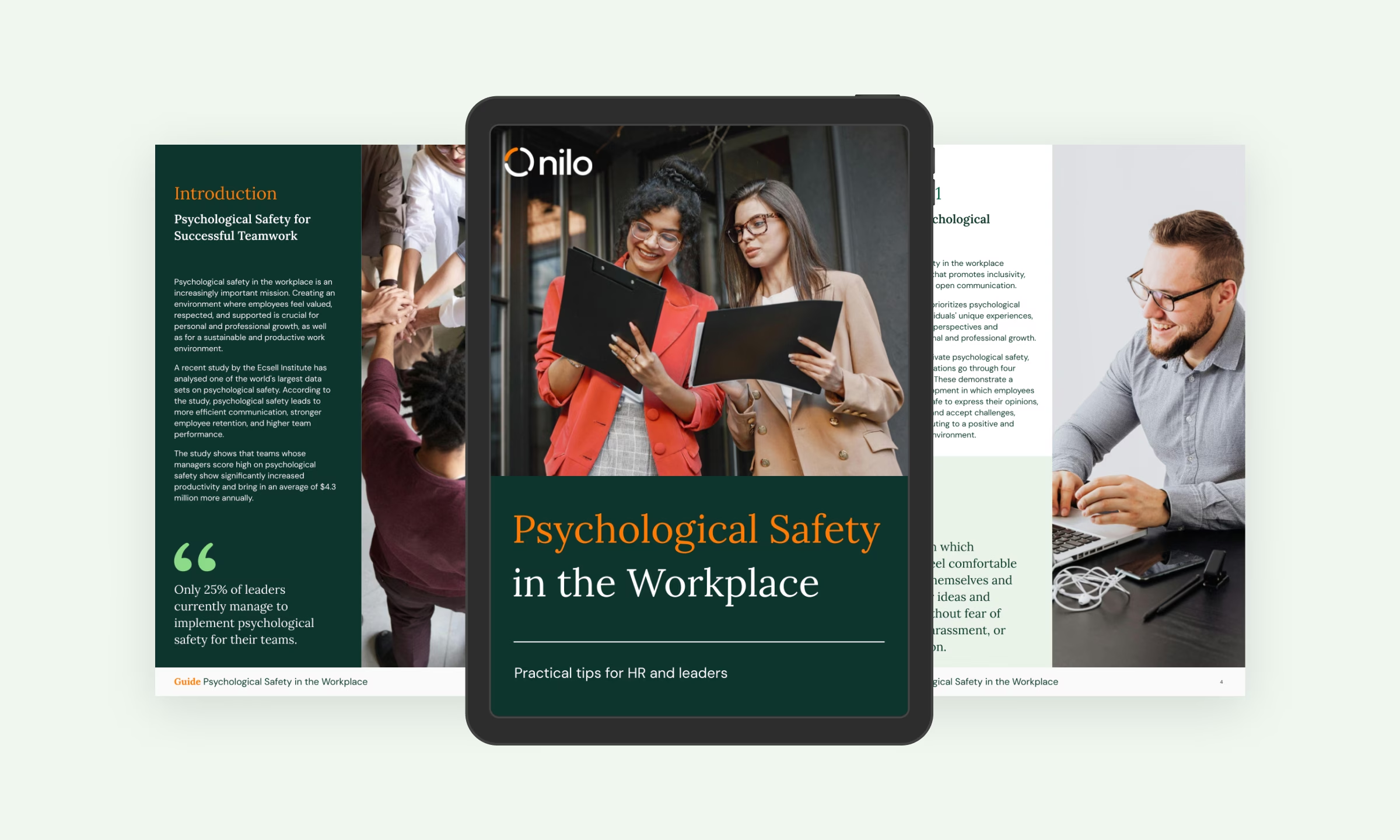
2. Corporate Culture and Psychological Safety
A workplace mental health program can only be effective if the environment allows employees to take advantage of it. If a company’s culture views self-care as a sign of weakness or does not consider mental health an acceptable topic of conversation, even the best program will go unused.
The key question is: Do employees feel safe enough to accept support? Psychological safety is essential for mental health support programs to be effective.
3. Communication
What many employees simply aren’t aware of is that the company offers mental health support — or they’ve forgotten about it because it hasn’t been mentioned in months. That’s why it’s important to provide regular updates on this topic: on the intranet, during team meetings, or through management’s internal communications.
The mix of digital and analog channels makes a big difference here. An intranet post doesn’t reach everyone — especially employees without a dedicated computer. Physical communication tools such as posters, flyers, or notices in the break room can be crucial for reaching blue-collar workers or employees who are less tech-savvy.
One aspect deserves special attention: privacy and anonymity concerns are the most common barrier to using the service. Employees ask themselves: Can my manager see what I’ve booked? Will my name end up on a list somewhere? These questions must be addressed from the very beginning.
nilo ensures user data protection and supports HR teams with comprehensive communication materials to promote the service to employees both online and offline.
4. Quality of mental health services
One final factor that is often overlooked: Usage rates also depend on whether the offering actually meets the needs of the workforce.
- A service that is available only in English or German, for example, excludes part of the (international) team.
- A service without a mobile app is difficult to reach blue-collar employees.
- If employees have to wait too long for one-on-one sessions, they end up not using the service at all.
- If sessions are only available during regular business hours, this effectively excludes employees working shifts or with inflexible schedules.
- The diversity of available psychologists also plays a role: Can employees find someone who matches their language, cultural background, or specific issues?
How can HR teams increase the use of mental health services?
HR can influence all of these factors and specifically increase usage rates — from selecting a provider to implementation and integration into daily work routines.
Step 1: Choosing the right provider
The foundation for high usage is laid right from the start, when choosing the right provider.
Specifically, this means:
- Involve employees and assess their needs: Ask your employees—through surveys, 1:1 conversations, or team meetings — where they actually see a need for support. Employees who are involved in selecting a benefit tend to identify more strongly with it and are more likely to use it later on.
- Set clear goals: For example, is the program intended to serve as a preventive measure, to address acute crises, or both?
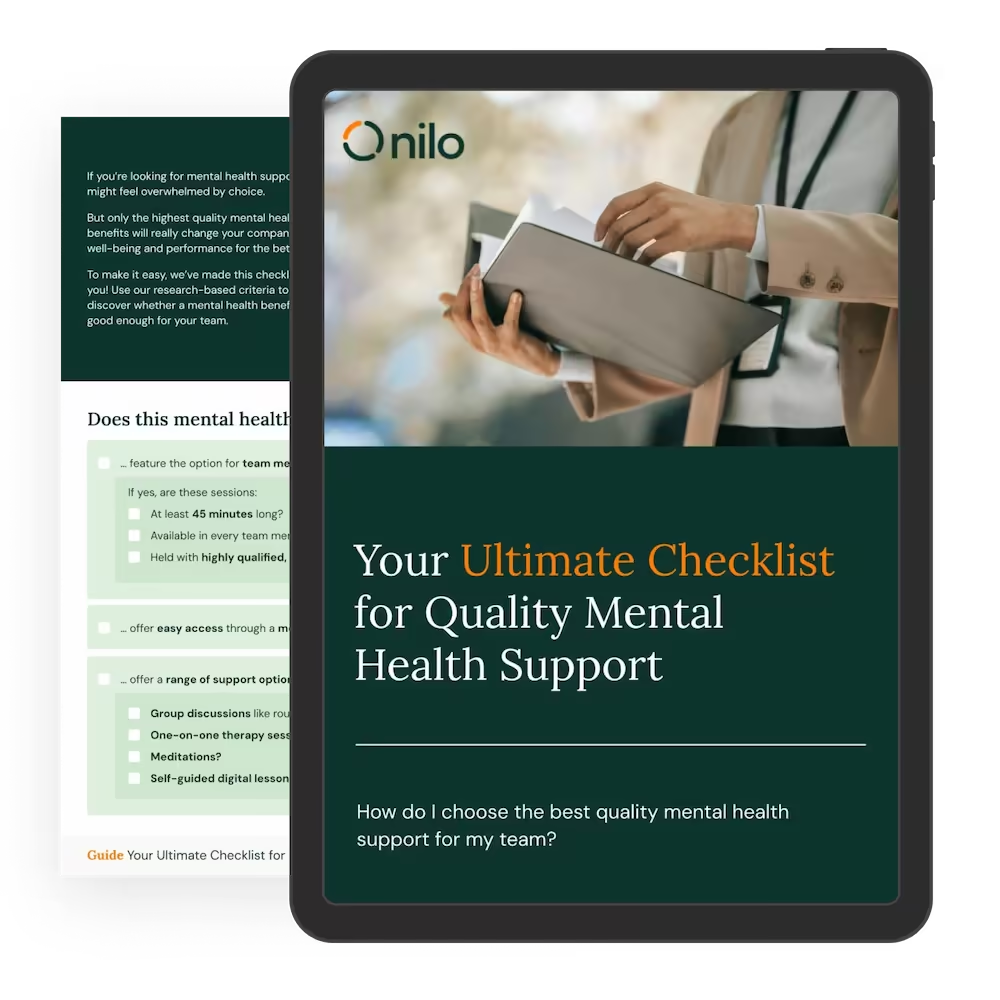
- Define quality criteria: Not all services are created equal. A structured checklist that covers key criteria such as the psychologists’ qualifications, languages, and data protection is helpful
Step 2: Tailor the launch
The launch of a mental health benefit shapes the first impression employees have of the program. This is what determines whether they find the program relevant — or not.
An effective launch should utilize multiple channels simultaneously: newsletters, the intranet, physical materials such as flyers or posters, and, if possible, a kick-off event to raise awareness of the initiative.
Three points are particularly important here:
- Emphasize privacy from the very beginning: Make it clear that individual usage data remains completely anonymous. The company receives only aggregated, non-personally identifiable statistics.
- Involve leaders: Don’t just keep leaders informed — make them active communicators.
- Take advantage of professional support: nilo provides Customer Success Managers to assist with the rollout, helping with planning, creating communication materials, and developing an implementation strategy. This takes the pressure off HR managers and ensures a successful rollout without requiring a significant time investment.
Step 3: Encourage everyday use
The launch is just the starting point. High usage rates over the long term are achieved when the offering is firmly embedded in the company’s structure.
Proven measures for this include, for example:
- Incorporating mental health into onboarding: This way, new employees can familiarize themselves with the resources available from day one—ideally with a clear, step-by-step guide to registration..
- Regular mention in all-hands meetings and team meetings
- Plan health days with a clear focus on mental health and the available support services
- Gather feedback and adjust the offer: What content is used most often? Which formats are well-received by the team? Regular feedback allows you to focus your professional development.
- Actively promote this during challenging times for the company: Especially when the workload is high, it’s worth communicating this offering in a targeted manner and positioning it as concrete support.
How is the usage measured?
The use of a mental health benefit can be measured both quantitatively and qualitatively — only the combination of the two provides a complete picture.
4.1 Quantitative Metrics
The key metrics for mental health services are:
- Registration rate: What percentage of employees have registered?
- Usage rate: What percentage have actively used the service over a certain period of time?
- NPS surveys within the platform: Employee ratings of the service
nilo provides HR teams with an HR dashboard that aggregates, anonymizes, and visualizes these and other key metrics. This makes it possible to immediately identify trends over time without being able to view individual usage data.

4.2 Qualitative Metrics
Numbers alone don’t tell the whole story. The only way to determine whether employees find the service helpful, appropriate, and trustworthy is through direct feedback:
- Pulse surveys with targeted questions about perceived value
- Feedback in one-on-one conversations or via anonymous feedback tools
A high usage rate that isn’t backed by any perceived impact isn’t a success. And positive feedback combined with a low usage rate indicates that the offering is good, but may only be helpful to a certain segment of the workforce or could be communicated more effectively.
Conclusion
A high utilization rate is the result of offering the right services to the appropriate workforce, embedded in a corporate culture that takes mental health seriously, and communicated by leaders who are fully committed to it.
The key factors are clear: leadership, culture, communication, and integration into processes. Added to this is a high-quality program that truly meets the needs of employees.